CAVE SYSTEM
01Layers of formations
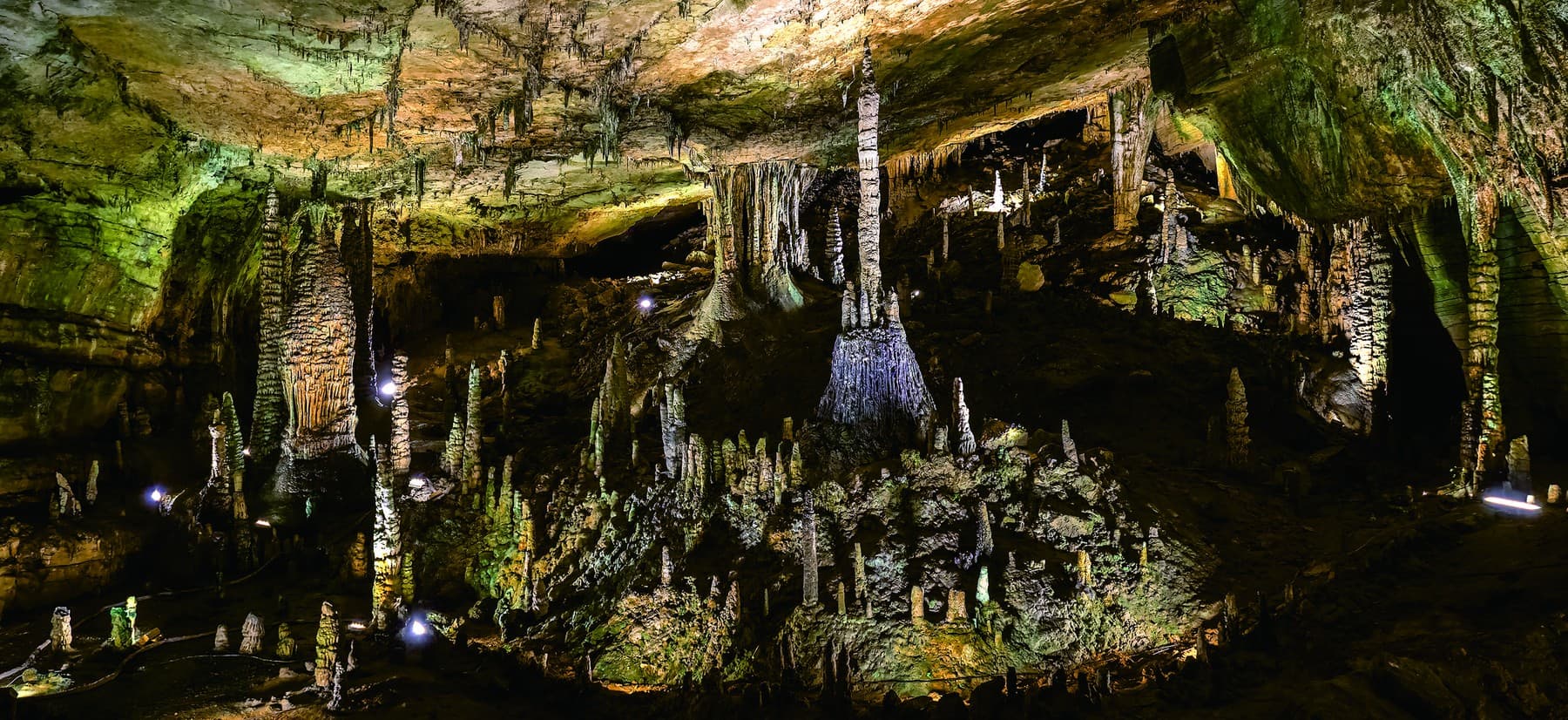
Stalactites, stalagmites and stone curtains occupy a chamber far wider than one viewpoint.
A four-level karst world of chambers, underground water and formations shaped far below the mountain surface.
The mountain surface gives little warning of the scale below: the official manual describes four vertical levels connected by a managed visitor route.
Yellow Dragon Cave is presented in the manual as Huanglong Cave. The experience combines large halls, narrow passages, water and steps; it should be chosen for genuine cave interest rather than treated as an effortless wet-weather substitute.
Understand the underground sequence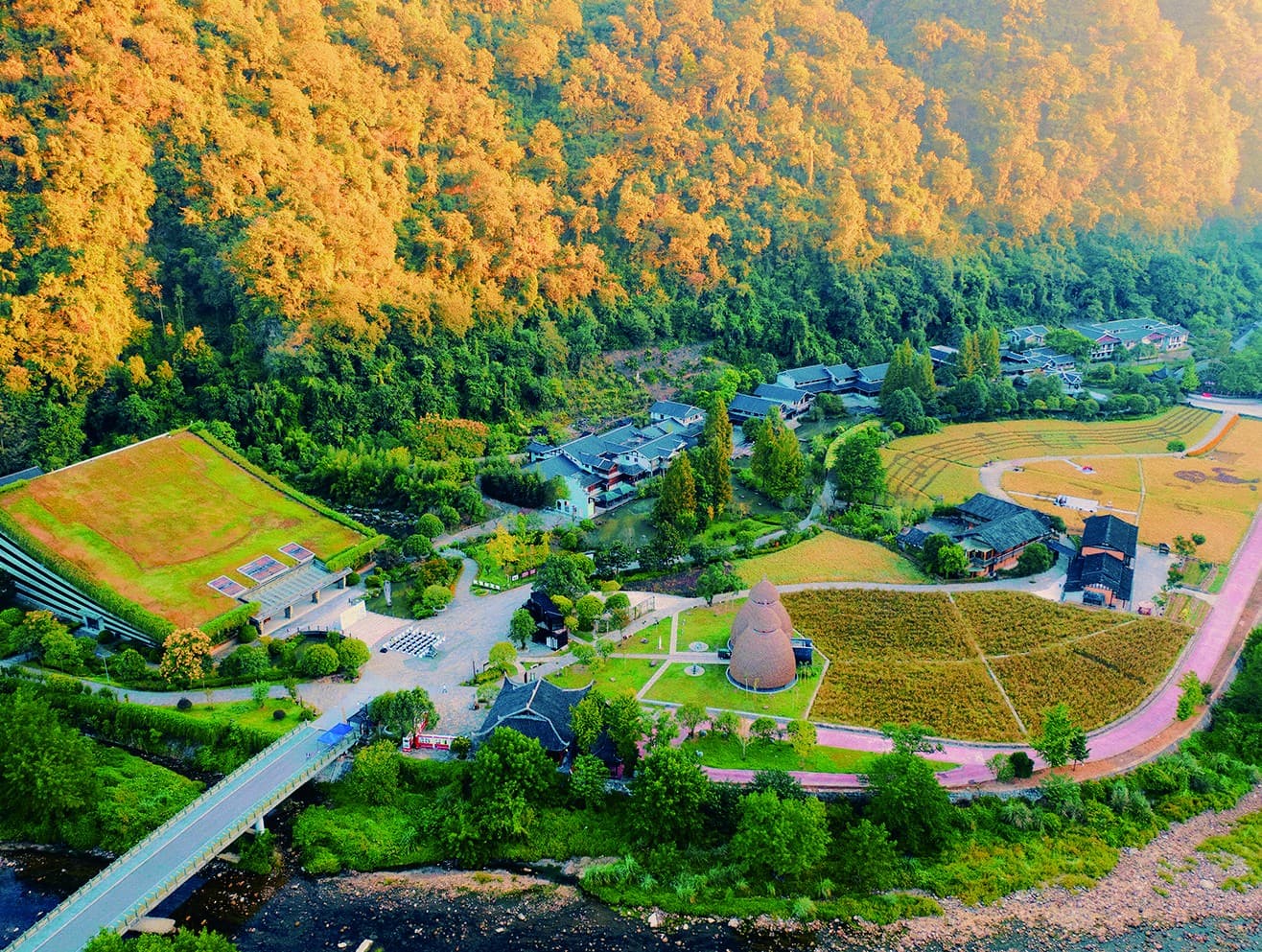
The contrast is part of the story: cultivated valley and forest outside, then a cave system extending through the limestone beneath.
The manual records two dry caves, two water caves, one reservoir, three pools and four waterfalls within a cave area of more than 200,000 square metres.
The official map is a dense loop of halls, passages and water. This responsive reconstruction keeps the main visitor logic clear.
Programmatic reconstruction of the official guide map. It is not a live navigation map.
The Manual does not reduce the cave to one coloured formation. Its character comes from changing scale: broad halls, massive columns and tighter routes between levels.
Stalactites, stalagmites and stone curtains occupy a chamber far wider than one viewpoint.
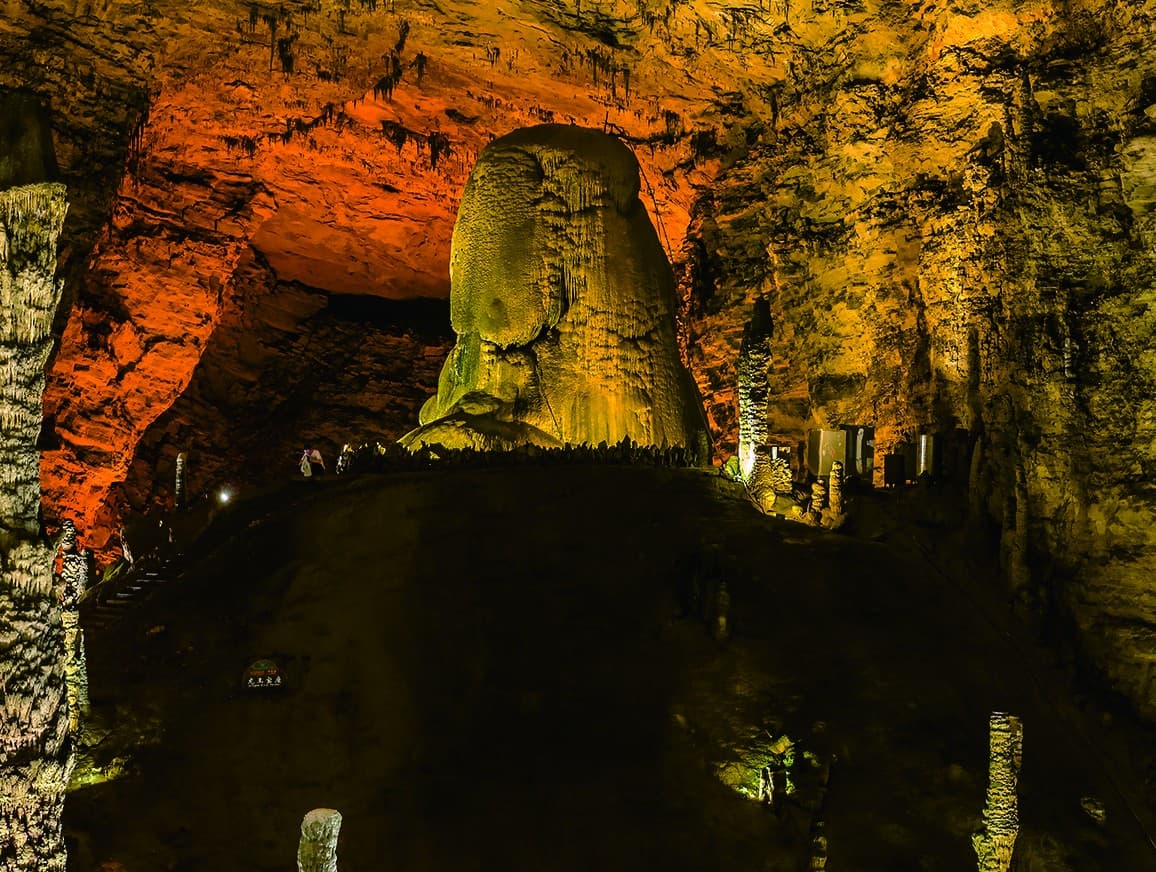
A monumental column anchors one of the cave's large illuminated halls.
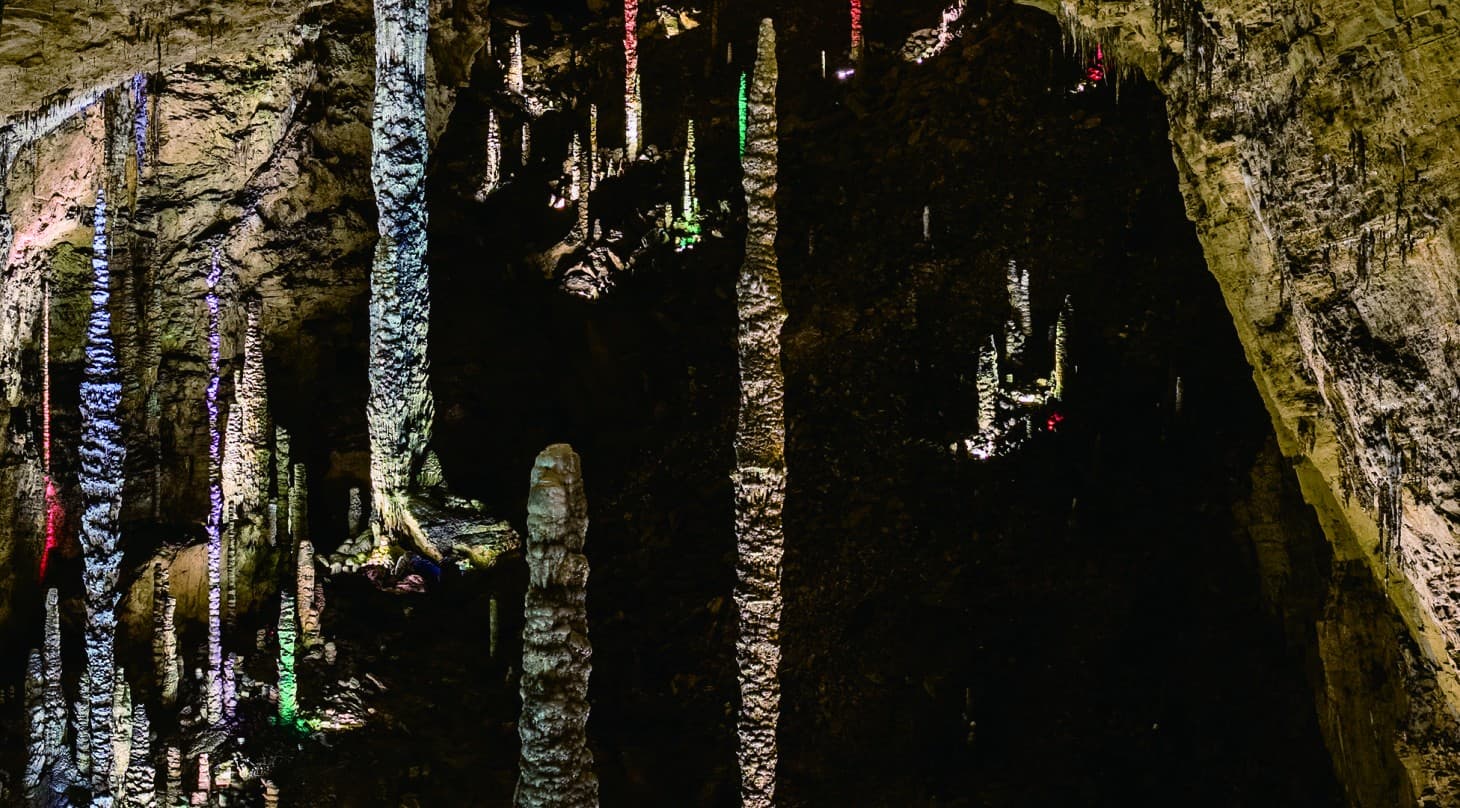
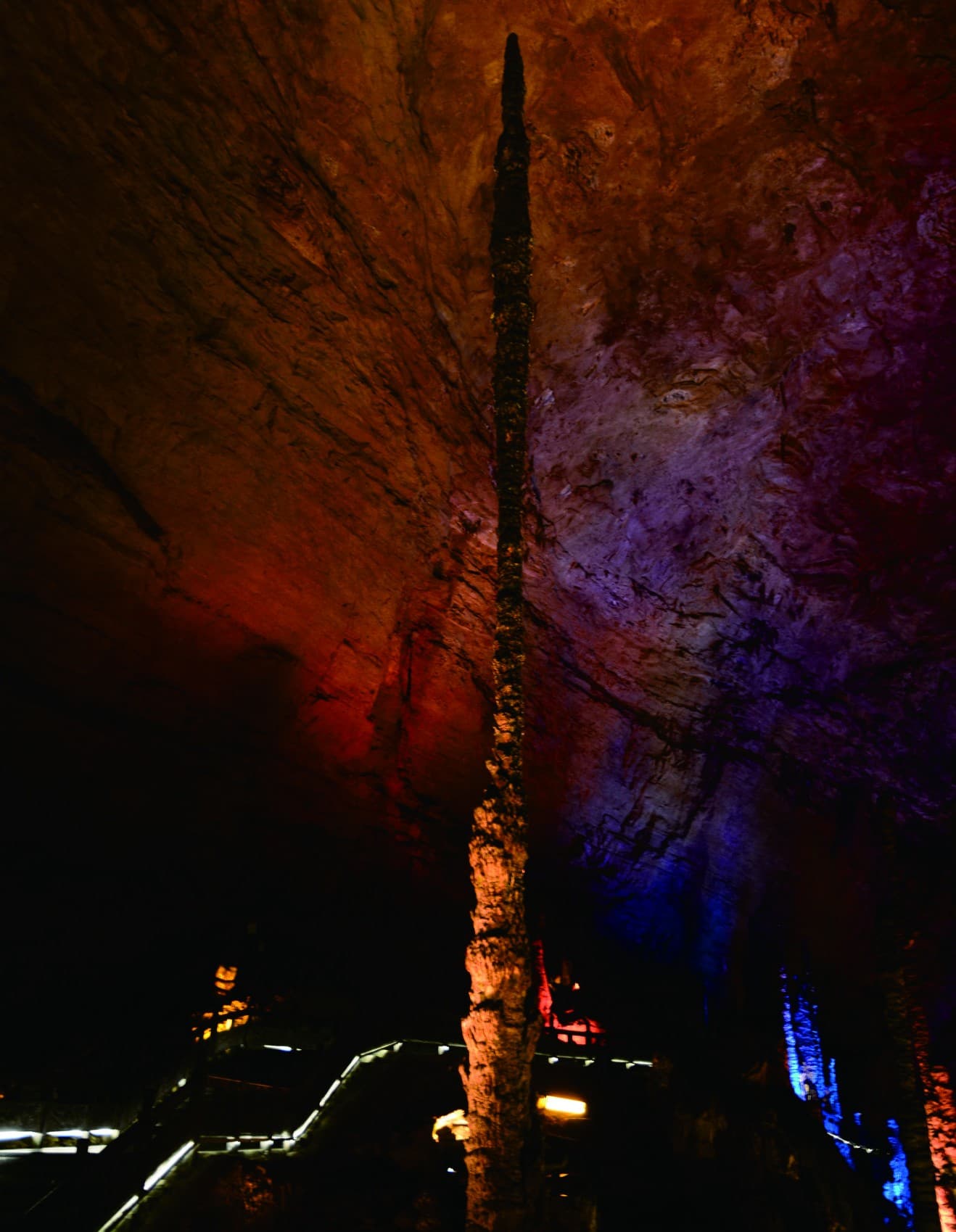
A slender stalagmite almost touching the chamber ceiling.
The Manual calls this stalagmite the cave's “Signature Treasure”. Its value is not only height, but its unusually narrow proportion and its position rising toward the ceiling.
The Manual explains the cave as a sequence, not a single hollow: limestone deposition, uplift, dissolution and repeated uplift created new groundwater levels below older chambers.
About 250 million years ago, marine limestone formed the material foundation.
Crustal movement raised the limestone, allowing surface water to enter fractures.
Dissolution enlarged joints into underground rivers, halls and passages.
New groundwater levels opened deeper chambers, leaving today’s four-storey cave.
Tell us about enclosed-space comfort, balance on damp steps and whether this is a central geology interest or one part of a wider Wulingyuan day.
Tour Guide Manual, PDF pages 25–26 / printed pages 41–44. Photographs, cave facts, place names and formation measurements are official, user-confirmed authorised materials. The route and formation graphics are programmatic responsive reconstructions and do not replace current operating guidance.