See less.
Experience more.
Choose one principal mountain landscape, use verified scenic transport relationships, and leave enough space for walking, waiting and recovery.
A lower-load edit.
Not an accessibility promise.
The Tour Guide Manual does not publish a separate route under this page's name. It does document the real mountain areas, walking references and scenic transport relationships used here.
Zhangjiajie Beyond turns those facts into two comparison modules. Neither is step-free, guaranteed easy or confirmed until current operations and the traveller's mobility are discussed.
Reduce what creates load.
- 01Fewer areas
One memorable mountain chapter creates less pressure than racing between several.
- 02Fewer transitions
Every shuttle, queue and transfer adds standing, uncertainty and cognitive load.
- 03Shorter walking blocks
Plan around continuous effort and steps, not only the total kilometres.
- 04More recovery time
Protect pauses before fatigue turns a viewpoint day into an endurance test.
Two modules.
Not one rushed circuit.
These are comparison frames, not fixed itineraries. Select the visual experience first, then test the walking and transport reality.
Closer icons. More visitor flow.
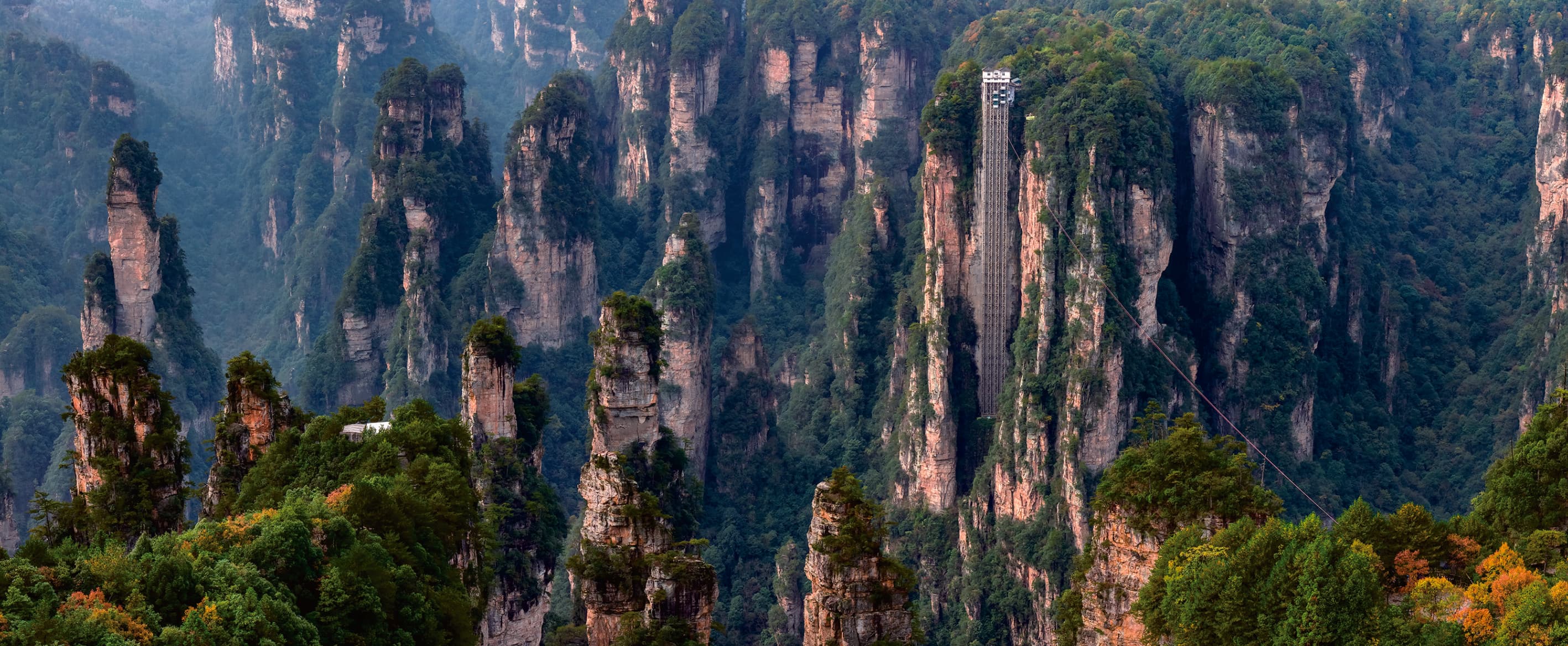
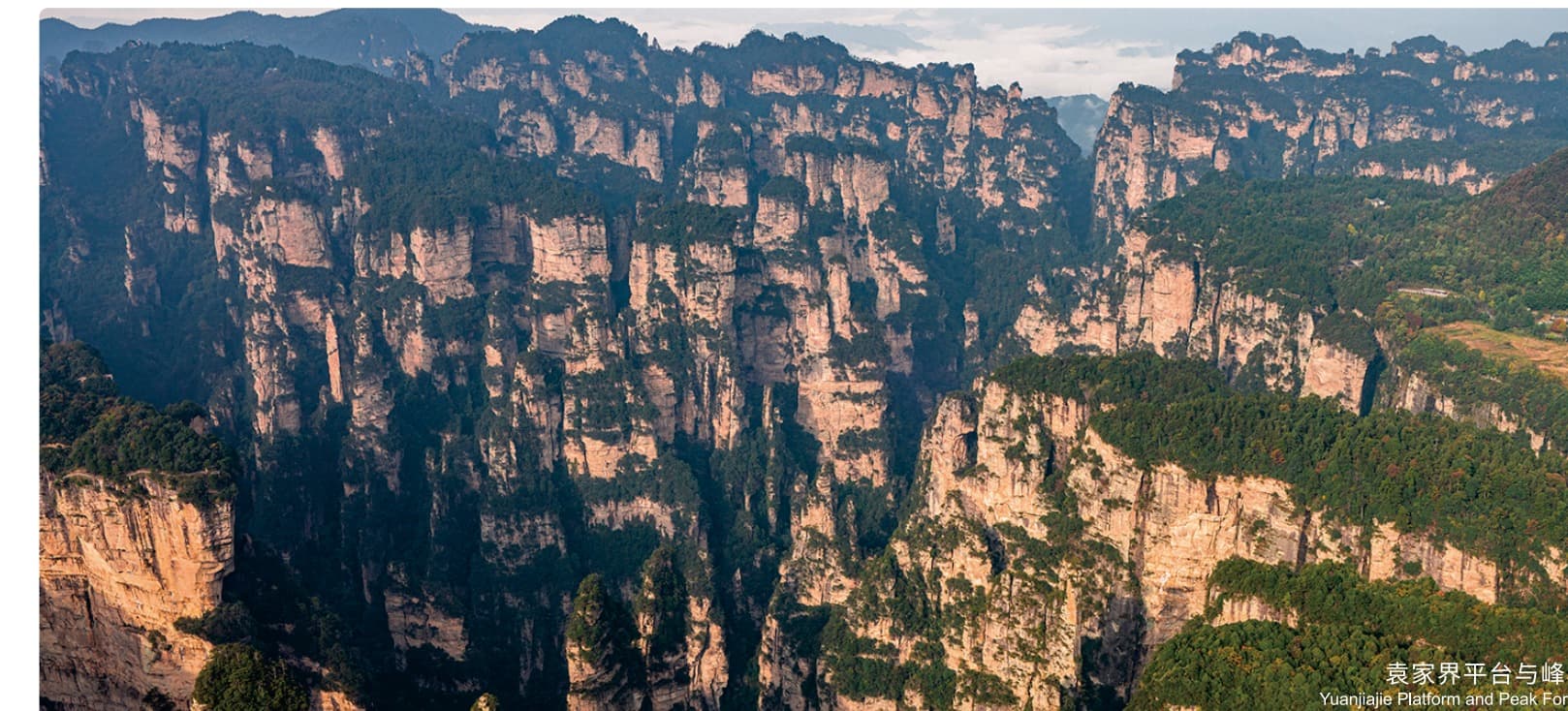
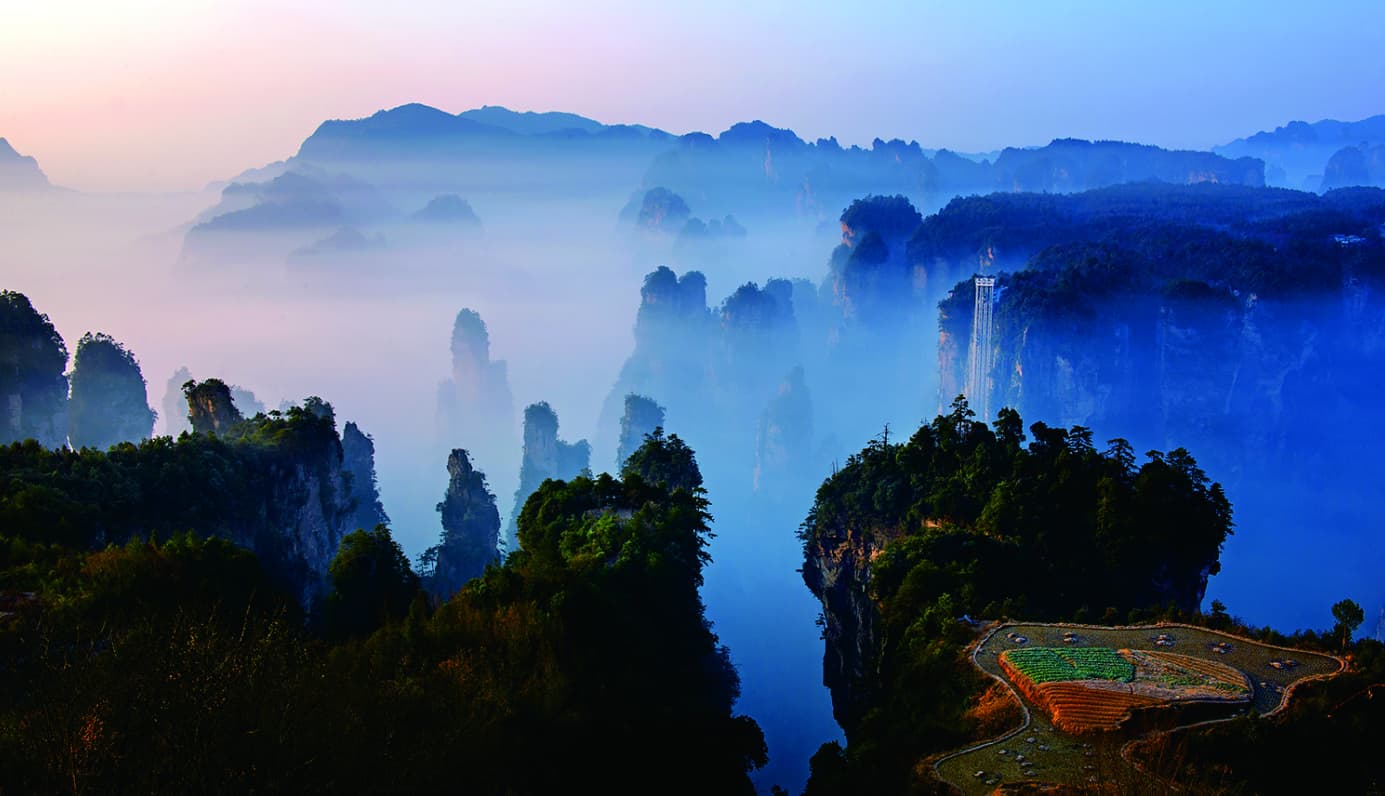
Choose the Manual's close-range pillar sequence—Enchanting Terrace, Avatar Mountain and the No. 1 Bridge—using the Bailong Elevator approach when current operations support it.
Manual reference: elevator uphill, then approx. 1.1 km on foot; approx. 1.5 km across the principal viewpoint sequence.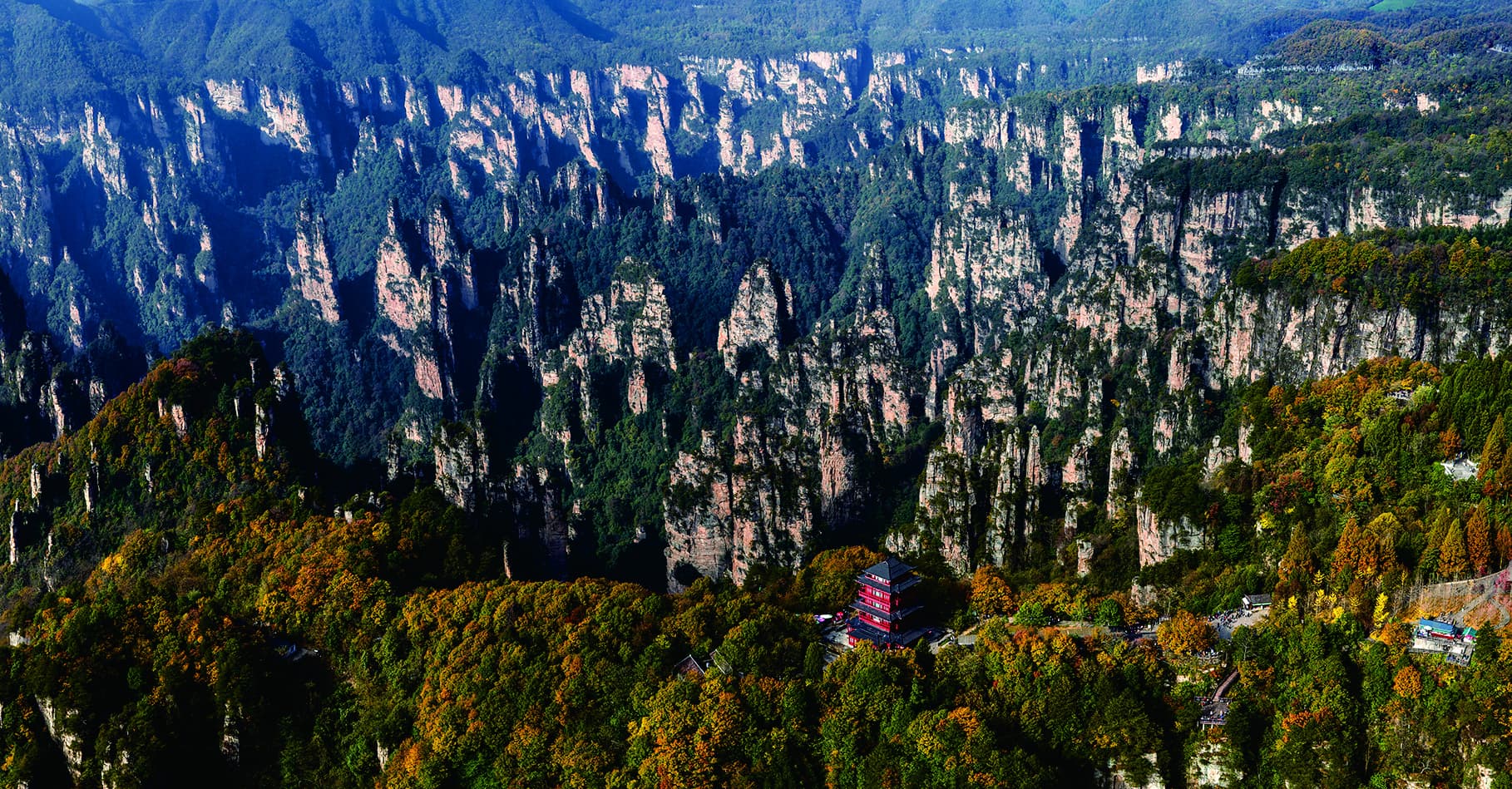
Wider horizons. A cableway frame.
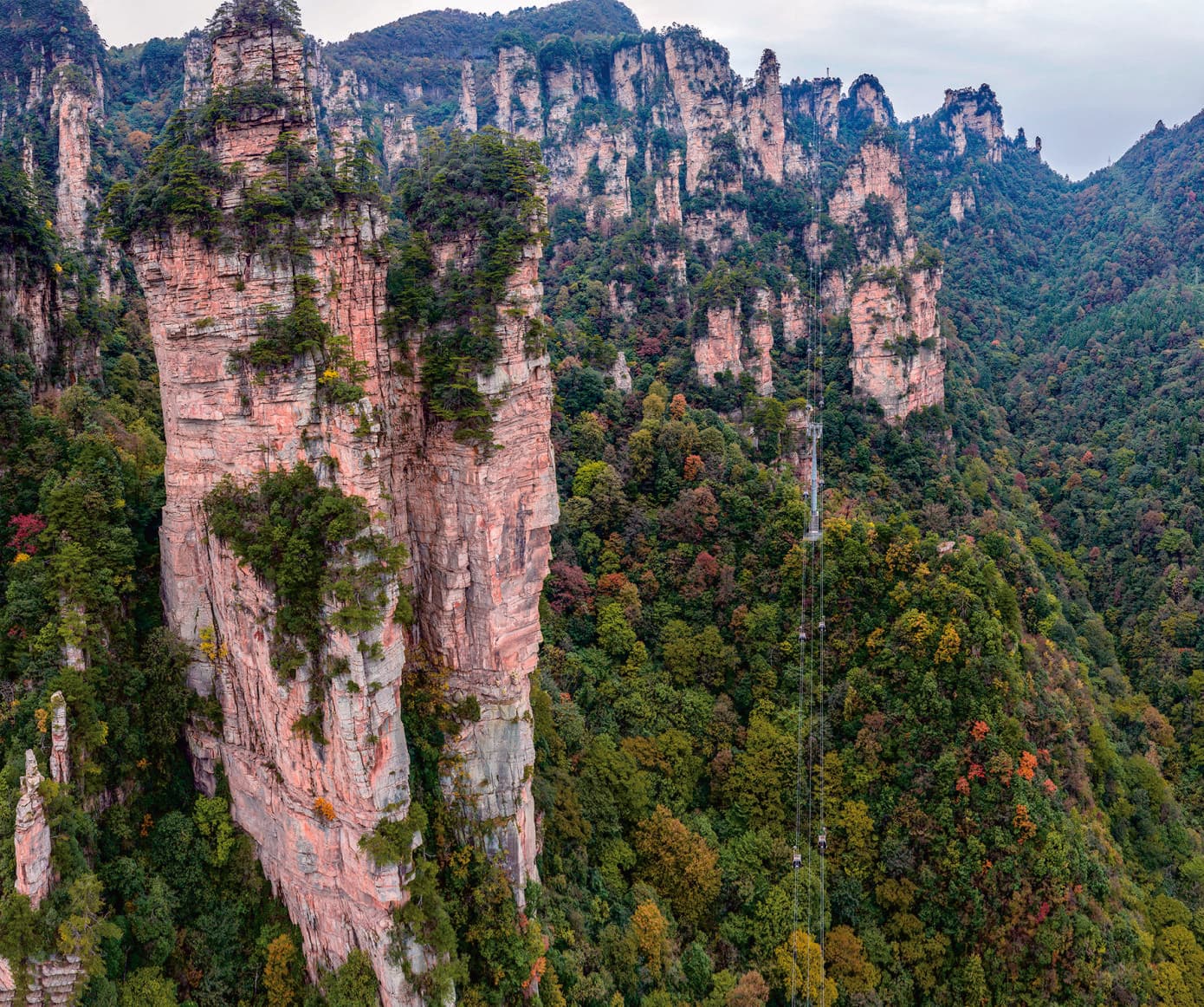
Choose Helong Park, Imperial Brush Peak and West Sea Peak Forest as one focused mountain chapter, with scenic shuttle and cableway movement where verified and operating.
Manual reference: approx. 1.5 km around Helong Park and 1.8 km by scenic vehicle to the upper cableway station.Pick a branch.
Do not chase both.
The Manual's Grand Loop connects both mountains. This planning edit deliberately branches from the East Gate and stops after one chosen core area.
- Shared start
- Wulingyuan East Gate
- Branch A
- Bailong Elevator → Yuanjiajie
- Branch B
- Scenic shuttle → Tianzi Mountain
Reduce ascent.
Keep the honest picture.
Elevators, cableways and scenic shuttles can change the steepest parts of the day. They do not remove walking between platforms and viewpoints, outdoor steps, standing in queues or weather exposure.
THE BEST MODULE DEPENDS ON MOBILITY, BALANCE, ENERGY, QUEUE TOLERANCE AND CURRENT OPERATIONS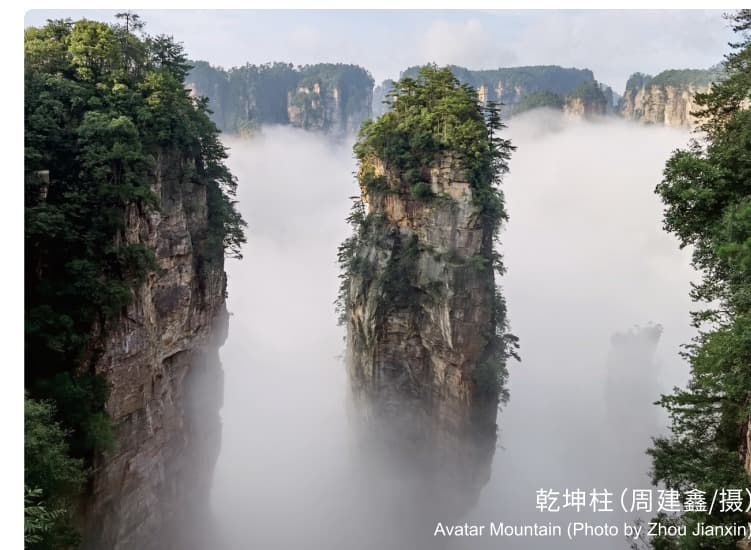
“Easier” must be
traveller-specific.
Lower load, not no load
Mechanical transport can reduce ascent, but viewpoint paths, steps, standing and queues remain.
One core area
The strongest reduction comes from selecting one mountain chapter rather than compressing several into the same day.
Protect pauses
A slower start, fewer transfers and more recovery time matter as much as the headline walking distance.
Discuss mobility
Share step tolerance, balance, joint concerns, walking aids and preferred maximum continuous walking time.
Choose the view.
Then define the limits.
Tell us which landscape matters most, your maximum comfortable walking block, step tolerance and preferred pace. We can test the appropriate module against current transport and access conditions.
Source basis: Tour Guide Manual PDF pages 15–16 (Yuanjiajie), 19–20 (Tianzi Mountain), 30 (official Grand Loop access relationships) and 31 (official elevator, cableway and mountain photography). The Manual does not present this easier-pace comparison as a separate named official route.